Technology · · 7 min read
Moisture Under the Floor — Why the MVB Barrier Is Critical
The most common cause of resin floor failures isn't the resin — it's the concrete beneath it. Water vapor drawn from the substrate can lift a whole floor and form blisters within months. The safeguard is an MVB barrier, which we include as standard. Here's why.
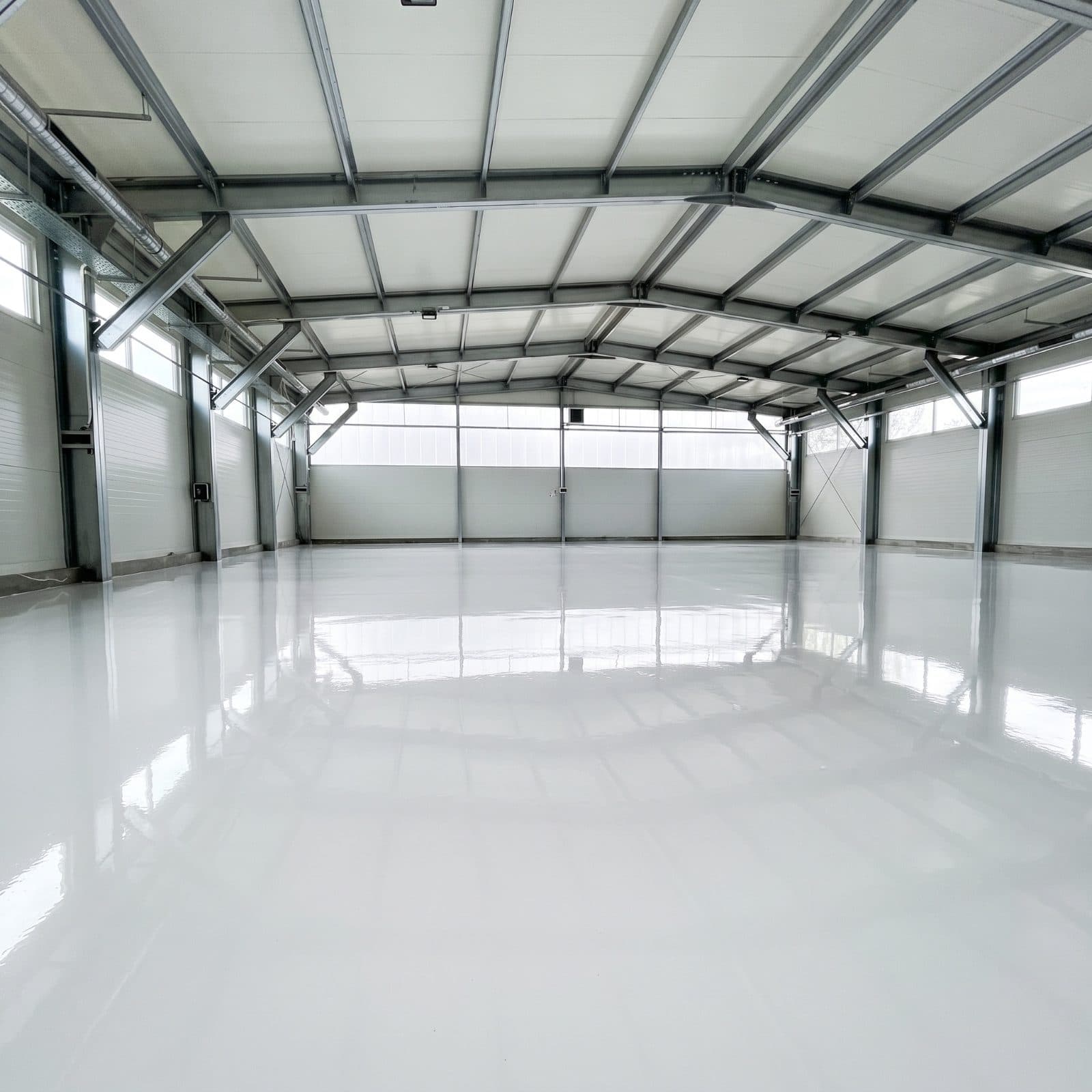
Where blisters and delamination come from
Concrete is never fully dry — a slab on grade constantly draws moisture. That moisture, as water vapor, travels upward and pushes against the sealed resin coating from below. With nowhere to escape, it forms blisters, ripples and eventually lifts the floor off the substrate. The effect worsens with temperature differences and no waterproofing.
What a moisture vapor barrier (MVB) is
The MVB is a special, dense epoxy layer applied directly to the prepared concrete before the actual system goes down. It acts as a membrane: it blocks water vapor and equalizes its pressure, so the following layers hold for good. It's one of the layers we show in the 'what you're paying for' section — more about our approach in the about page.
When the MVB matters most
- Slabs on grade without working waterproofing (garages, halls, ground floors).
- Basements and rooms below ground level.
- Fresh screeds that haven't matured and given off moisture.
- Halls and warehouses with no damp-proofing under the slab.
How we check moisture
Before we pour anything, we measure substrate moisture. The safe threshold for most systems is around 4% — above it, without a barrier, the risk of delamination rises sharply. That measurement is a standard part of our free measurement and quote.
Why competitors skip it
The MVB is extra material and an extra day of work — and it's the easiest place to 'trim' the price to make an offer look cheaper. You only see the effect a year later, when blisters appear. We treat the MVB as standard, not an option, because it decides whether the floor lasts a decade.
And if the substrate is already problematic?
Old tiles, cracked concrete, signs of damp — that doesn't always rule out resin, but it demands proper diagnosis. When you can coat over an existing substrate and when you can't is covered in our article on resin over old tiles and concrete. In halls and warehouses the moisture question matters even more — more in the offer for business and halls.
Not sure your substrate is dry and ready? Book a free measurement — we'll test the moisture and choose the right protection before anything is poured.